What is inside a traditional bean bag
A traditional bean bag is filled with expanded polystyrene beads, usually around 2 to 3 millimetres in diameter. The beads compress under weight and shift around the body, which is what produces the iconic conforming sit feel. The problem with EPS beads is structural: they break down over time. Each compression cycle slightly fragments the beads, reducing their volume. After approximately 12 to 18 months of regular use, a bean bag will have lost between 20% and 40% of its original fill volume, and will look visibly deflated. Manufacturers often address this by selling refill bags as a separate consumable product. The chair itself is intentionally a slowly-degrading good.
What is inside a cloud foam chair
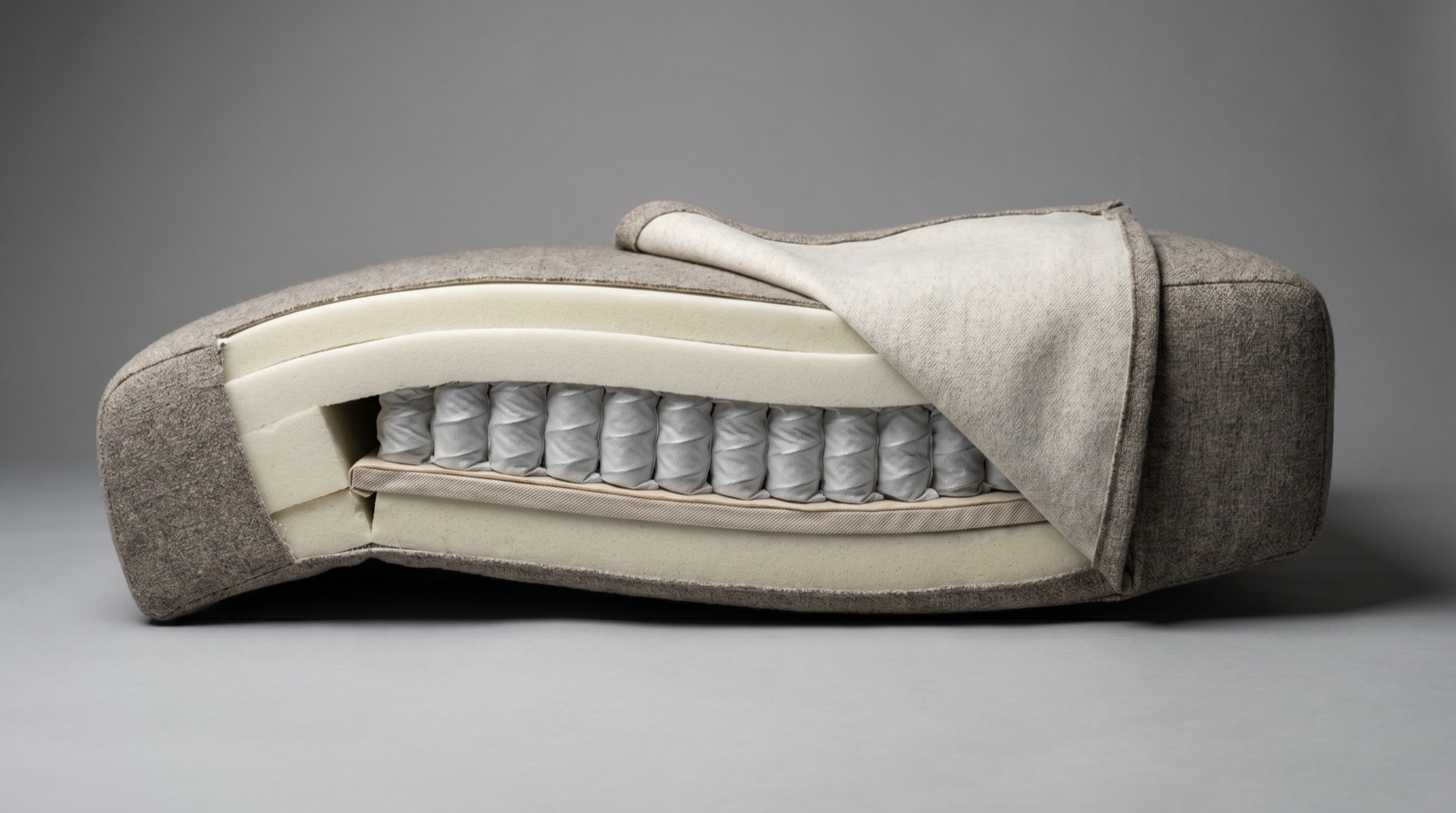
A cloud foam chair, in its premium form, replaces EPS beads with a single block (or a small number of blocks) of polyurethane foam. The foam compresses under weight and decompresses when the weight is removed, similar to a mattress. The difference between a good cloud chair and a bad one is whether the foam alone is doing the work, or whether the foam is paired with a return mechanism.
The cheap version uses a single block of low-density polyurethane foam wrapped in fabric. Same problem as the bean bag, different mechanism. Each compression cycle slightly degrades the foam structure. After three to six months, the foam loses its ability to spring back, and the chair develops a permanent depression where the user normally sits.
The engineered version pairs the foam with a hidden internal pocket spring system, similar in principle to the construction inside a hybrid mattress. The foam handles immediate comfort and surface conformity. The springs handle long-term shape retention. Each compression cycle is absorbed by the springs first, which protects the foam from the structural fatigue that destroys the cheap version.
What this looks like in practice
In practice, the difference between the two engineering approaches becomes visible at around the 60-day mark. Both versions look identical when they arrive. Both feel similar in the first weeks of use. By month three, a foam-only cloud chair will have started to develop a visible compression depression where weight is regularly placed. By month six, the depression will be permanent. By month nine, most reviewers describe the chair as "saggy" or "lopsided."
The pocket-spring version, by comparison, looks substantively the same at six months as it did on day one. The foam compresses and recovers cleanly because the springs absorb the structural load. We have inspected one such chair after 18 months of regular use and could not visually distinguish it from a brand-new unit.
How to identify which version you are looking at
The product specification is the only reliable signal. Look for explicit mention of an internal pocket spring system or a high-density polyurethane foam blend in the construction notes. If the specification mentions only "foam fill" with no further detail, assume it is the cheap version. Lifestyle photography is not informative on this question. Customer reviews from buyers in the first 60 days are not informative either; the failure mode does not become visible until later.
The price is sometimes informative but not always. A cheap foam-only chair typically lists in the $30 to $80 range. A pocket-spring chair typically lists in the $80 to $300 range at full DTC pricing, though the same product is occasionally available at clearance or liquidation pricing for reasons unrelated to its quality. Where this happens we cover it separately under our exclusives section.