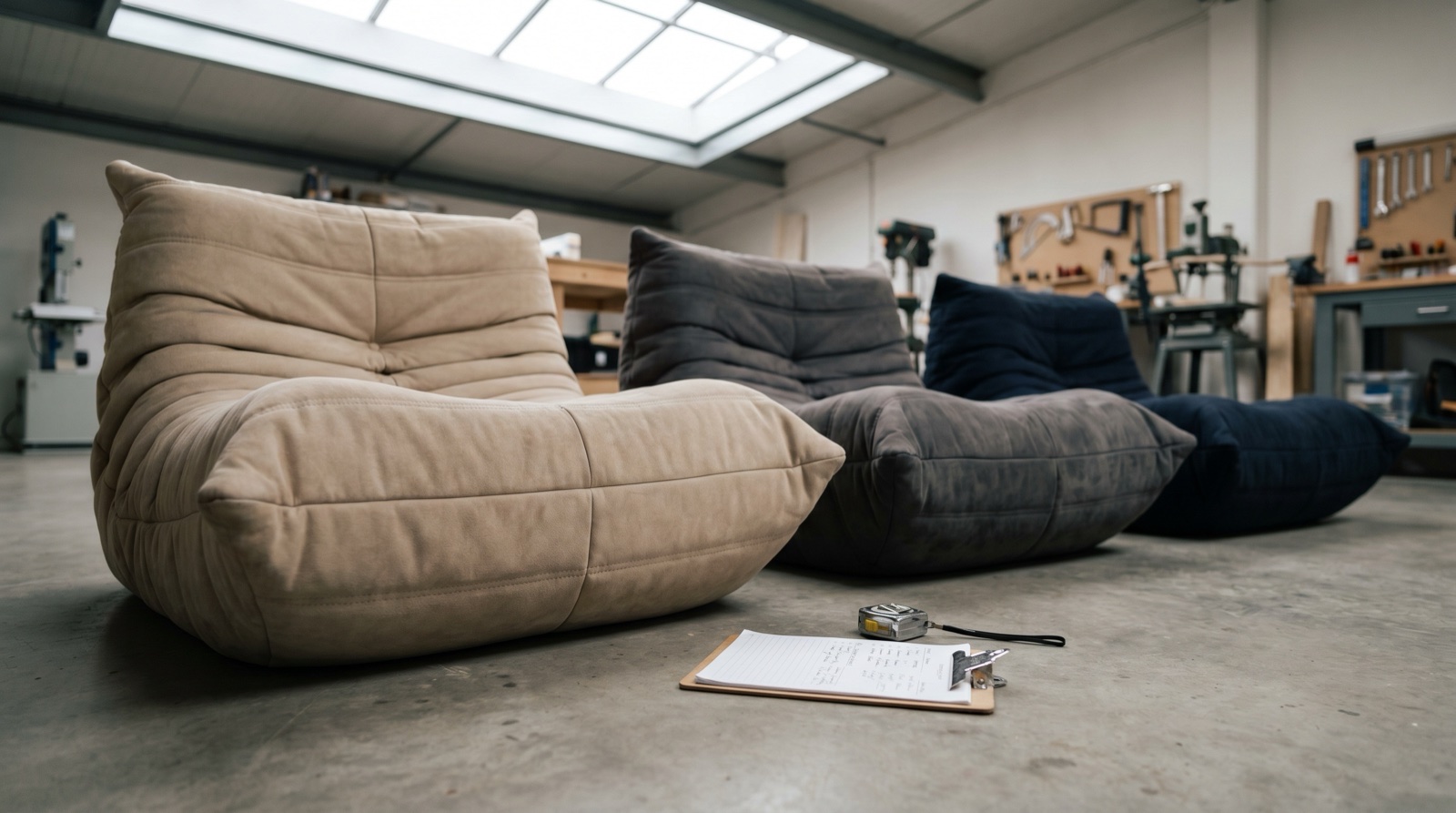
The test
We selected 12 brands based on a combination of TikTok mentions, Instagram Reels reach, and retailer-tracker data. From each brand, we purchased the most-photographed item in their catalogue (typically a chair, sofa, or modular seating piece). Each unit was placed in a real domestic environment for 90 consecutive days, used by adults of average build, photographed weekly, and graded on three criteria: shape retention, fabric integrity, and frame stability.
We did not contact any of the brands in advance. Every unit was purchased anonymously through the brand's regular consumer-facing site, at the regular consumer-facing price.
The results, in summary
Three of the 12 units finished the 90-day test in approximately the same condition they arrived in. Five of the 12 had visibly compressed, sagged, or developed permanent depressions where weight was placed regularly. Two units had fabric pilling, surface tearing, or seam separation. Two units had structural failures (one armrest detachment, one frame cracking) before the 60-day mark.
The three units that finished the test in good condition shared one engineering choice in common. Each used a hidden internal pocket-spring system inside its foam, similar to the construction used in premium hybrid mattresses. The springs return the foam to its original shape between uses, which prevents the permanent compression that destroyed most of the other units in our test.
Why most of the category fails
The reason most "cloud" or "marshmallow" furniture fails is straightforward: foam without a return mechanism gets permanently compressed by repeated weight. The product looks identical out of the box. The compression only becomes visible after a few weeks, by which point the customer has often moved past the return window, written a positive review, and forgotten about the unit. The structural problem then surfaces months later, in a different photo, on a different platform, often after the brand has moved on to its next product launch.
The brands that solve this problem solve it with engineering rather than marketing. Pocket springs are the most common solution. High-density polyurethane foam blends are another. The cheap version of the category uses a single block of low-density foam wrapped in fabric, which is what produces the failure mode we documented in eight of our 12 units.
What we recommend
We do not publish brand-by-brand rankings, partly because retail availability and product specifications change quickly in this category, and partly because the test sample (one unit per brand) is too small to publish as a definitive judgment. What we will publish is the test methodology, the failure modes we observed, and the engineering criteria that separated the units that survived from the units that did not. If you are evaluating a purchase in this category, look for explicit mention of an internal spring system or a high-density foam blend in the product specifications. If neither is mentioned, assume the unit is one of the 75% that did not survive our test.
We will republish the methodology and a follow-up test in the second half of 2026, with a wider sample.